
Answer the following questions.
Date: 2015-10-07; view: 890.
Look through the words given below and choose those which (in your opinion) could be used when describing student activities in Britain and the USA.
Boring, enthusiastic, entertaining, dull, tiresome, initiative, annoying, encouraging, uninterested, funny.
1. What is the popular image of student life in Britain and the USA? 2. Do all students study full-time at university or college? 3. What can you say about students that combine studies with work? 4. Are younger students thought to be lazy? 5. Do British students pay to go to university? 6. Do American students pay for their tuition? 7. What is grant? 8. What does financial aid package include? 9. When do many students take part-time jobs? 10. Why do many students in Britain and the US go to universities away from their home towns? 11. What are the advantages of living in a hall of residence? 12. What are the advantages of living with parents? 13. What is one of the highlights of the year in Britain? 14. What is one of the most important celebrations in American universities? 15. Do British and American students spend much time on social activities?
2.10 Read the text and find information about:
а. British colleges and universities
b. graduate and post-graduate degrees
c. forms of instruction
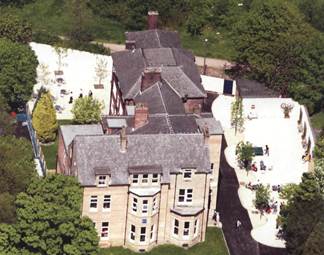
Most big towns in Britain have both a university and a college of higher education. Universities offer three- and four-year degree courses; colleges of higher education offer both two-year HND (Higher National Diploma) courses, as well as degree courses.
A degree is the qualification you get from university when you pass your final exams. You are then awarded a BA (Bachelor of Arts), BSc (Bachelor of Science) or BEd (Bachelor of Education).
Undergraduates, students who are studying for their first degrees, go to large formal lectures, but most of the work takes place in tutorials: lessons in groups of ten or more when the students discuss their work with the lecturer.
When you complete your first degree, you are a graduate. Some students then go on (continue) to do a second course or degree, called a postgraduate course or degree. These students are then postgraduates and they often get: an MA (Master of Arts), e.g. a Masters in English, an MSc (Master of Science), e.g. a Masters in biology or a PhD (Doctor of Philosophy) (minimum three years), e.g. a PhD in computer science.
The head of a department at a university is usually called a professor. An ordinary teacher or lecturer is not a professor.
| <== previous lecture | | | next lecture ==> |
| Agree or disagree with the statements given below. In case of agreement repeat the statement, in case of disagreement correct it. | | | Answer the following questions. |